

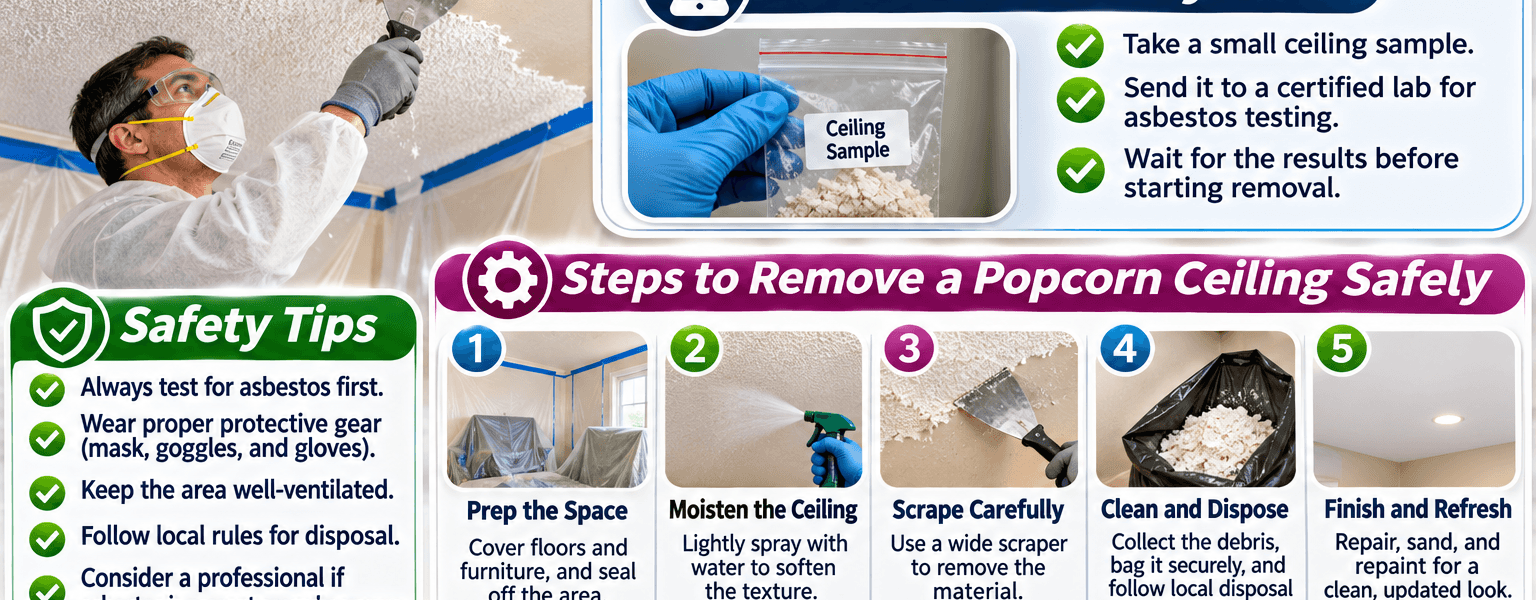

Before scraping a popcorn ceiling, test it for asbestos. Many textured ceilings were installed decades ago, and some contain asbestos fibers that become hazardous when disturbed. If the test is negative, removal is messy but manageable; if positive, hire licensed asbestos professionals.
Popcorn ceilings were popular because they hid flaws and dampened sound. Today many homeowners want smoother, brighter ceilings. Here is the safe way to get there.
Step 1: Test the Material
Hire an accredited inspector or use a lab-tested sampling method according to local rules. The EPA notes that asbestos was used in some textured ceiling materials, especially in older homes. Do not scrape or sand until results come back.
If results show asbestos, do not remove it yourself. Some states and cities require licensed contractors for asbestos removal, and options may include encapsulation instead of removal.
Step 2: Prepare the Room
- Remove furniture or cover it with plastic.
- Turn off power to ceiling fixtures and fans.
- Cover floors and walls with plastic sheeting.
- Wear eye protection, a dust mask or respirator, and old clothes.
- Check for lead paint if the ceiling was painted in an older home.
Step 3: Remove and Refinish
Lightly mist small sections with water, then scrape gently with a wide putty knife or ceiling scraper. Avoid soaking the drywall. After scraping, the ceiling usually needs skim coating, sanding, priming, and painting to look smooth.
Expect dust and patience. Many homeowners hire professionals who can complete removal and refinishing in a few days with less mess.
What It Usually Costs
Costs depend on room size, whether testing finds asbestos, how much repair the drywall needs, and whether painting is included. Professional crews often price by square foot. Asbestos abatement, when needed, costs more because of special containment, protective equipment, and disposal requirements.
Ask for quotes that separate testing, removal, refinishing, and painting so you can compare contractors fairly and decide which parts you might handle yourself. Before signing, confirm who cleans up debris and how furniture will be protected during the work.
Hiring a Pro
Ask contractors whether they test first, how they contain dust, how they protect floors, and whether repainting is included. Get written quotes with timelines.
Ceiling texture removal and drywall finishing pros are listed in JoeAnt’s home improvement services directory, so homeowners can compare a few quotes without hassle.
Test First, Then Scrape
Test popcorn ceilings for asbestos before removal, hire licensed pros if results are positive, and prepare rooms carefully if you tackle a negative-tested ceiling yourself. Plan for skim coating and painting afterward, and use JoeAnt to find contractors if you would rather skip the mess.