
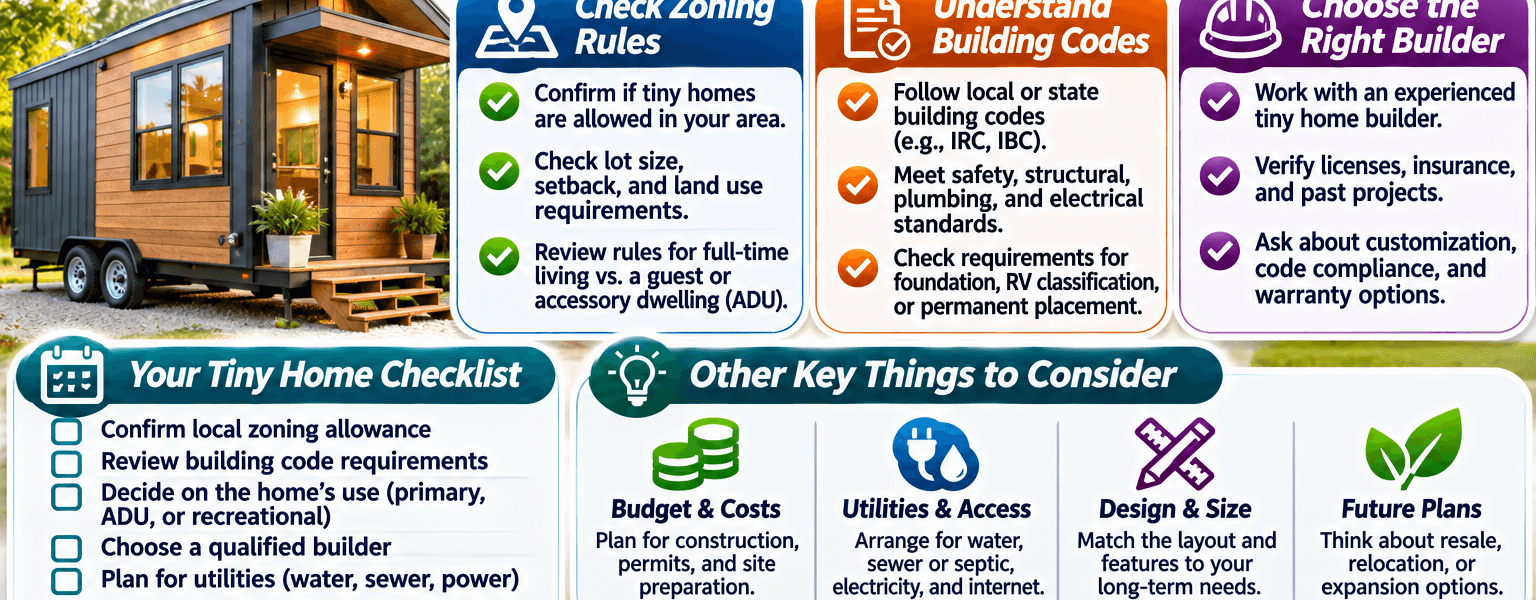

Before buying plans or land for a tiny home, check local zoning and building rules. Some areas allow tiny homes on foundations as primary residences or accessory dwelling units, while others restrict tiny homes on wheels, which are often treated like recreational vehicles. Starting with local rules prevents expensive surprises.
Tiny homes can be a smart, affordable option when planning is done right. This checklist covers the basics.
Zoning and Legal Checklist
- Confirm minimum dwelling size rules in your zoning district.
- Ask whether accessory dwelling units are allowed on your lot.
- Check rules for tiny homes on wheels, which may be limited to RV parks.
- Review homeowners association restrictions.
- Ask about utility hookup requirements and permits.
Building Code Basics
Many jurisdictions use the International Residential Code, which includes Appendix AQ addressing tiny houses for those that adopt it. Requirements can cover ceiling heights, lofts, stairs, ladders, and emergency escape openings. Tiny homes on wheels may need certification as RVs or park model homes instead.
Ask your local building department which codes apply before choosing a design.
Choosing a Builder
Ask builders about experience with local permits, certifications, warranties, and timelines. Request references and visit completed homes if possible. Confirm what is included, such as appliances, utilities, delivery, and site preparation.
Financing can be different too. Some lenders treat tiny homes on wheels like RV loans, while foundation homes may qualify for traditional mortgages.
Living Small: Practical Tips
Before committing, spend a weekend in a tiny home rental to test the space. Notice how storage, kitchen size, bathroom layout, and loft access feel day to day. Consider future needs, such as aging, pets, or remote work, and plan built-in storage early, since adding it later is harder.
Think about insurance and resale too. Insurers may treat tiny homes on wheels differently from foundation homes, and resale markets vary by area. Ask lenders and insurers early so there are no surprises after construction. Talk with tiny home owners in your area about their experience with permits, utilities, and winter living.
Planning the Site
Plan water, sewer or septic, electricity, and access for delivery trucks. Site preparation can be a significant part of the budget.
Builders and contractors experienced with small homes are listed in JoeAnt’s construction and remodeling listings, so you can compare a few before committing.
Small Home, Big Homework
Tiny home success starts with zoning, building codes, utilities, and a builder who knows local rules. Check regulations first, confirm what codes apply, compare builders carefully, and budget for site work. JoeAnt can help you find builders to talk with.